
A-Frame Sheds For Sale
-
A-Frame Shed – Vinyl Select options -
A-Frame Shed – Wood Select options -
Economy A-Frame Shed – Vinyl Select options -
Economy A-Frame Shed – Wood Select options
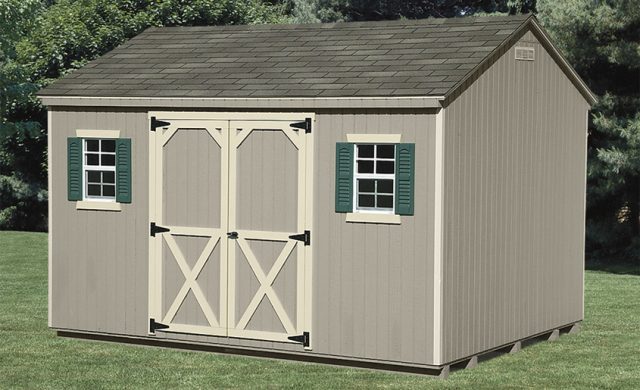
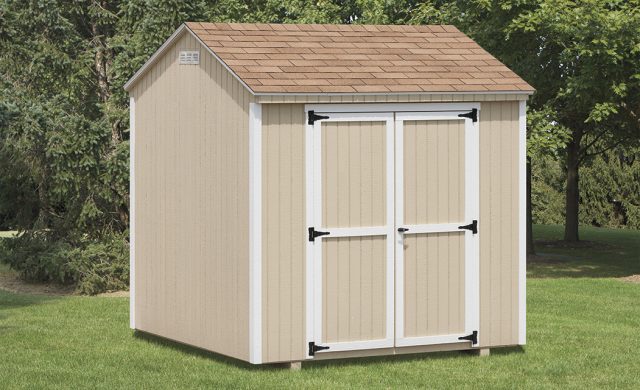
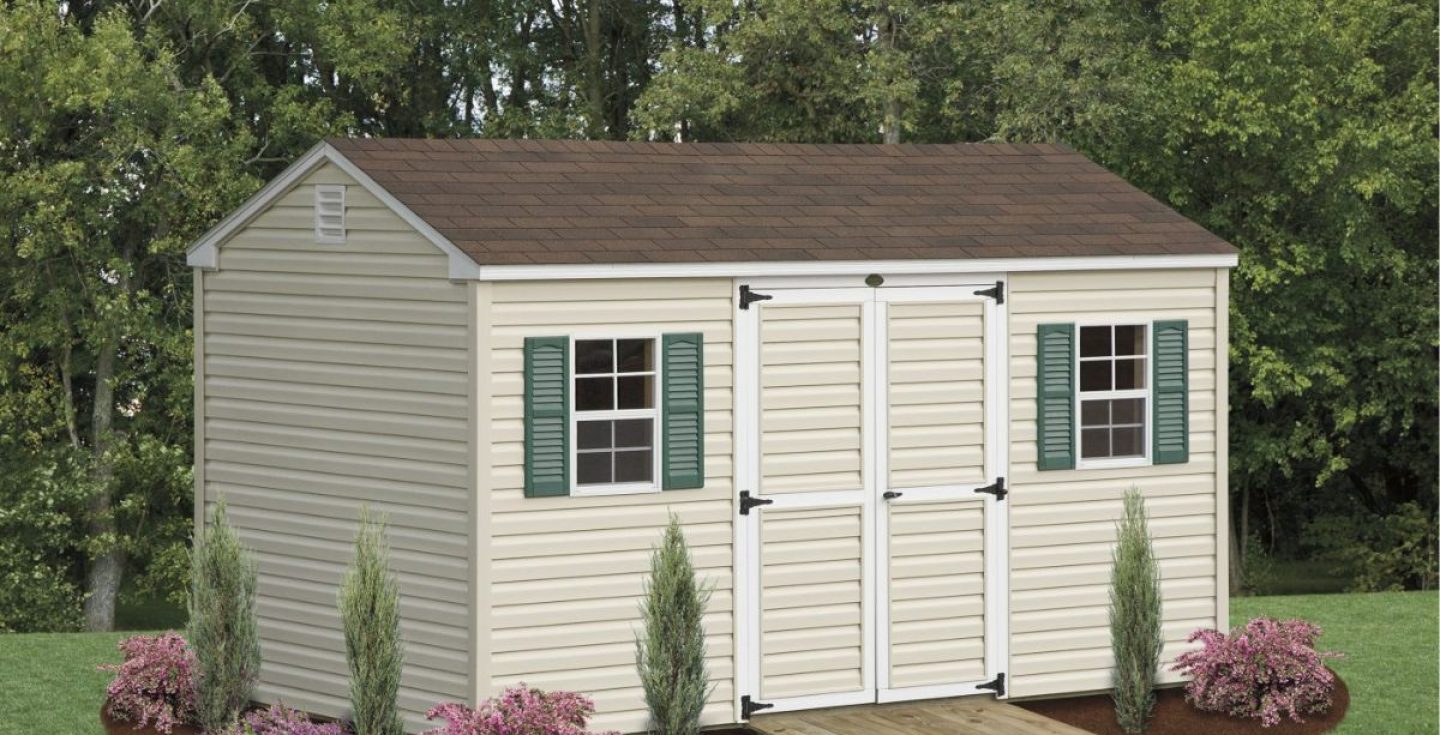
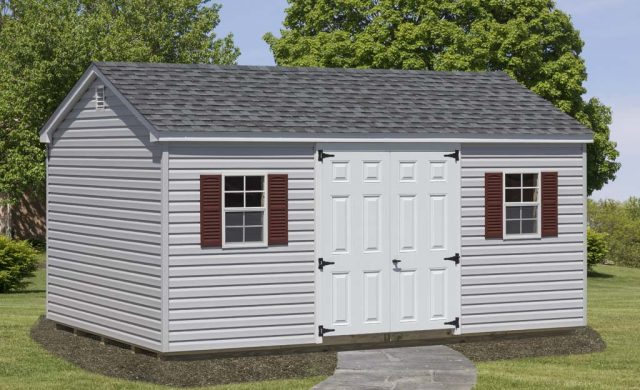
The A-Frame is the shed most people picture when they picture a shed, and it’s the model we build more of than any other. The standard A-frame roof with the radiant barrier keeps the interior bright, and if you order the steeper roof, it leaves headroom for a loft or overhead storage that flat-roof designs can’t match.
Every A-Frame we build comes standard with:
- 6’6″ sidewalls
- 56″ double doors
- Two gable vents
- Pressure-treated floor joists
- Aluminum sill plates
- A free upgrade to architectural shingles
Sizes run from 6×8 up to 14×40. Build yours in the configurator below, or send us a few details and we’ll put together a quote.
Prefer a different roofline? Compare our Dutch Barns, Quaker Sheds, New England Sheds, and Mini Barns, or browse every storage shed we build.
Vinyl or Painted Wood A-Frame Sheds
Your siding choice drives both the look and the amount of work the shed asks of you over the next twenty years.
Vinyl is the low-maintenance option. It never needs painting, not this decade, not the next. Color goes all the way through the material, so scuffs don’t show the way they do on painted surfaces. Rinse it off once a season, and you’re done.
Painted wood costs less up front and gives you a warmer, more traditional look. Plan to repaint every 10 to 12 years, depending on sun exposure. If your shed sits under trees or on a north-facing wall, budget toward the shorter end.
Both finishes turn up throughout our project gallery if you’d rather see them on finished builds than on a color chart.
What Size Do You Actually Need?
The most common regret we hear is buying one size too small. A rough guide:
| Size | Fits |
| 6×8 – 8×8[CR2] | Hand tools, push mower, bikes, seasonal storage, too tight for a riding mower |
| 8×10 – 8×12 | Push mower, wheelbarrow, hand tools, bikes, off-season patio furniture |
| 10×12 – 10×14 | Riding mower plus garden tools and wall shelving, with room to walk around |
| 10×16 – 12×16 | Riding mower and a real workbench, the smallest size that works as a shop |
| 12×20 – 12×24 | Workshop with project space, or a motorcycle/ATV plus storage |
| 14×28 – 14×40 | Contractor gear, business inventory, vehicle storage, multi-purpose layouts |
Two things worth knowing before you decide: doorway clearance matters more than square footage if you’re storing a riding mower, and a loft adds usable storage without adding footprint, which matters if your township has a size threshold for permits.
Need more than 14×40? That’s garage territory, and our 1-car A-Frame garage carries the same roofline if you want the two to match.
Options and Upgrades
Most of what people add:
- Windows — standard or large, with or without shutters
- Ramps — wood or pressure-treated, sized to your door
- Steeper roof pitch[CR3] — adds loft and overhead storage headroom
- Cupolas — with or without a weathervane
- Shutters — a dozen-plus color options
- Extra or wider doors — including single walk-in doors on the gable end
- Lofts, shelving, and workbenches
- Roof and siding colors — mix and match trim, siding, and shingle
The configurator lets you see combinations before you commit, and our full options catalog[CR4] covers the windows, doors, cupolas, and colors we stock. If you want something that isn’t in the builder, call us; most of what we make is custom anyway.
Contact Us For Pricing
Site Prep and Delivery
Foundation. We recommend a crushed stone pad. It drains, it’s forgiving of minor settling, and it costs less than concrete. Typical spec is 4 to 8 inches of 3/4-inch clean crushed stone, compacted and leveled, with the pad running 14 inches wider and longer than the shed itself[CR5] . Concrete works too and is the better call for heavy equipment or when anchoring for wind. Above 8×12 the gravel pad stops being a recommendation and becomes a warranty requirement, and levelling a 10×12 or larger shed up on blocks voids the warranty outright.[CR6] Rather not do it yourself? We build pads too, laser-levelled, with a pressure-treated border. The full spec and current rates are in our Terms and Conditions.
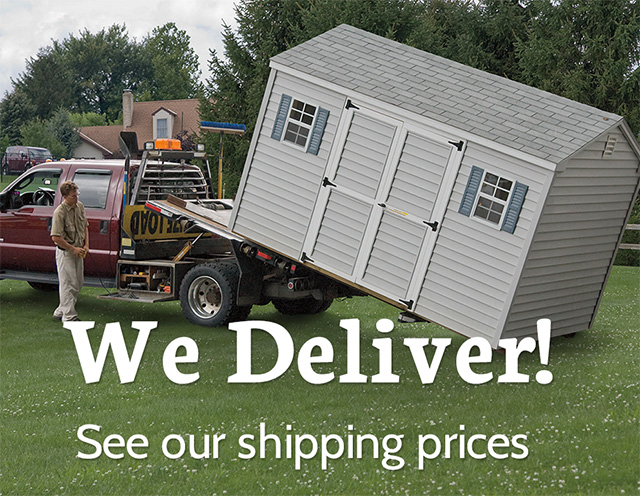
Access. Our delivery equipment needs a clear path roughly the width of the shed plus two feet, on ground firm enough not to rut. The usual obstacles are low branches, fence gates, sharp turns between the driveway and the backyard, and soft ground after rain. Send photos of your access route when you request a quote, and we’ll tell you straight whether it works. If a truck genuinely can’t reach the spot, we can move the shed in on a dolly or build on site; both options carry a surcharge.
Permits. Most townships require a zoning permit for sheds above a certain size and enforce setbacks from property lines and easements. Rules vary a lot even between neighboring townships, so check with your municipality before you order. We can provide drawings and dimensions for your application.
Timing. In-stock structures typically deliver in 1 to 3 weeks. Custom builds typically run 6 to 9 weeks[CR7] .
Get a Quote
Tell us the size you’re thinking, the options you want, and where it’s going. Send us the details and we’ll come back with a real number, no pressure, no obligation.
Questions first? Call 717-875-4412. We’d rather talk it through than have you guess.
Note: All shed deliveries and installations require a confirmed delivery quote. Call 717-875-4412 with any questions!